How to Choose a Specialist Shop
Walk through the decision your exotic car is asking you to make, step by step.
Chain, Generalist, Dealer or Specialist
You own a Ferrari, a Lamborghini, or a Maserati. You need work done on it—scheduled service, a repair, diagnostics before a long trip, storage prep, or just a thorough inspection. The question is not whether you need help. The question is where to get it.
A chain shop will turn your car away. A general-purpose mechanic will have the skill but not the specific tools a mid-engine supercar or an Italian grand tourer demands. A franchised dealer is available, but their work order queue and labor rates reflect an assembly-line business, not the precision your machine deserves. That leaves a specialist—someone who chose to build a business around cars like yours specifically.
The difference between a specialist shop and everywhere else is not that they are better at what they do—it is what they chose to do in the first place.
Choosing that shop well requires knowing what you are looking for. Here is how.
Engine, Brakes, Electronics: Specialist Territory
Know When You Need Specialist Care
Some work you can defer or handle yourself. Most you cannot. Exotic cars use materials and systems—carbon ceramic brakes, mid-mounted engines, traction control systems tuned to handle supercar weight distribution, electronics specific to Italian or German performance calibration—that require someone who knows what that machine is.
The rule is simple: if the work involves the engine, transmission, brake system, suspension, or electronics, or if a warning light appeared that you do not recognize, the specialist shop is not optional. Neither is the timing. Letting a problem sit in a climate-controlled garage is cheaper than rushing to the wrong shop and explaining why the repair costs more than you budgeted.
Any shop can say its technicians are qualified, but ASE certification is a credential a driver can ask to see: it takes two or more years of experience, passing exams, and recertifying every five years. You can verify that at the National Institute for Automotive Service Excellence.
Referrals First, Then a Visit to the Bay
- Start with referrals. Ask other owners of the same marque if they have found a shop worth returning to. Ferrari clubs, Lamborghini groups, and Maserati communities exist specifically so that conversations like this one happen. A shop that has held the same location and the same specialization for five years or more is a shop someone there probably knows.
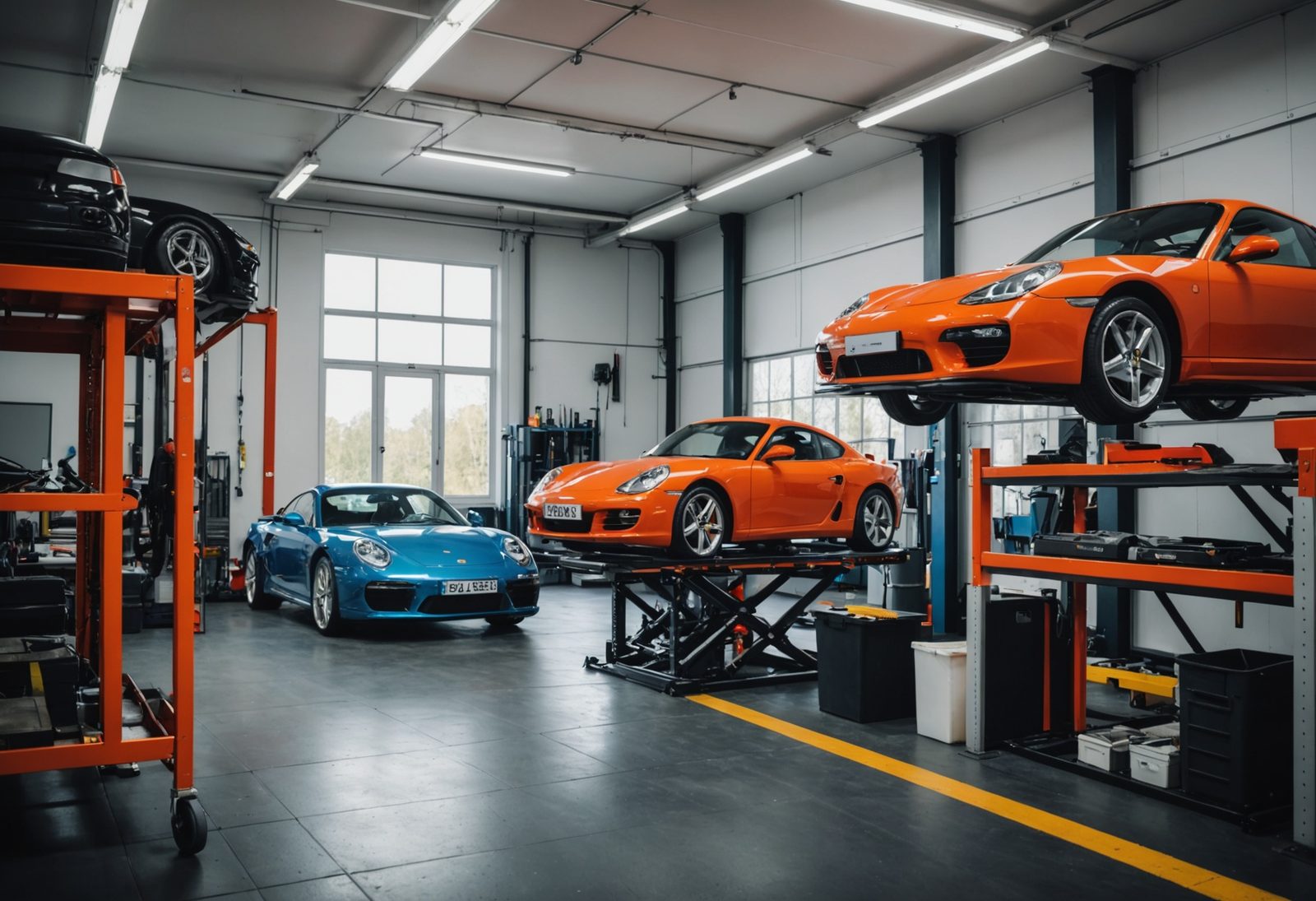
- Check the site and the bay. Visit in person. A shop that works on exotics has invested in climate control, lift capacity, diagnostic equipment tuned for the marques it serves, and a waiting area that does not insult you. You will see it immediately. The lift should handle a car's weight safely; the floor should be clean; the work orders should be legible.
- Ask about parts and lead times. Most of what your car needs is not in stock. It comes from Italy, or Germany, or the supplier who serves only that factory. A competent shop knows where to source each part and how long it takes. They will give you a realistic lead time before they order, and they will not be surprised when it arrives.
- Request documentation. Before you leave, ask them to write down the scope of work, the parts they will use, and the labor hours they estimate. This is not paperwork. It is the agreement you are making. A shop that will not write it down is a shop that knows the number will sound bad when you see it.
- Decide based on honesty, not on price. The cheapest shop is the cheapest for a reason. The expensive shop is expensive for a reason too. The right shop is the one that called you after the first day of work to say they found something else that needed attention, wrote down what it was, and waited for your decision rather than calling back when it was done to ask for more money.
A Detailed Car and Itemized Paperwork
Choosing in a Hurry
The mistake is deciding based on urgency. You need the car ready for a trip, or the warning light is new and bothering you, so you call the closest shop and take an appointment. Three weeks later you are explaining to a friend why the shop found a "problem" they charge differently to fix, why the parts they ordered were not the ones you authorized, or why the estimate was half the final bill.
The right time to choose a specialist is before you need one. Call three shops while the car is sitting idle. Ask to speak with someone who knows the marque. Get estimates on a minor service—a fluid change, a filter replacement, something not urgent. See how they treat you when they are not fighting a deadline. The shop that is clear, patient, and willing to show you the work is the shop to call when you actually need them.
Minor Service, Diagnostics and Major Work, Priced Apart
Marque Depth, Factory Access and a Clear Scope
Key Considerations
-
Specialization Depth
Does the shop work on your marque, or do they just claim to? A shop that has worked on Ferraris for fifteen years is not the same as one that has worked on three in the last six months.
-
Diagnostic Capability
Can they read the OBD system on your car? Can they access the factory service bulletins? A shop without that access is guessing.
-
Transparency on Scope
Before they touch your car, do they show you what they are looking for and explain how they will know when they have found it? A clear technician saves money and heartache.
-
Relationship to Time
Will they commit to a timeline and stick to it? Will they call if something unexpected comes up? The best shops protect your time the way they protect your car.